Dry-Aging: The Science of Flavour
Dry-aging is not a gastronomic trend. It's a centuries-old process that the modern meat industry nearly eliminated in the name of efficiency, and that has regained prominence as diners have started asking again where what they eat comes from.
At Carbònic, 30 days of aging is the minimum requirement for any cut to appear on our menu. What happens during that time in the temperature and humidity-controlled chambers is not magic: it is applied biochemistry in the service of flavour.
What happens inside the aging chamber
Two processes work in parallel. First, moisture loss: between 15 and 25% of the initial weight evaporates, concentrating flavour exponentially. Second, enzymatic action: calpains and cathepsins—the meat's natural proteolytic enzymes—slowly break down muscle fibres, tenderising the texture and generating the compounds responsible for the characteristic notes of aged meat: toasted butter, hazelnut, wet earth, and an almost cured cheese quality that may surprise at first nose but integrates perfectly on the palate.
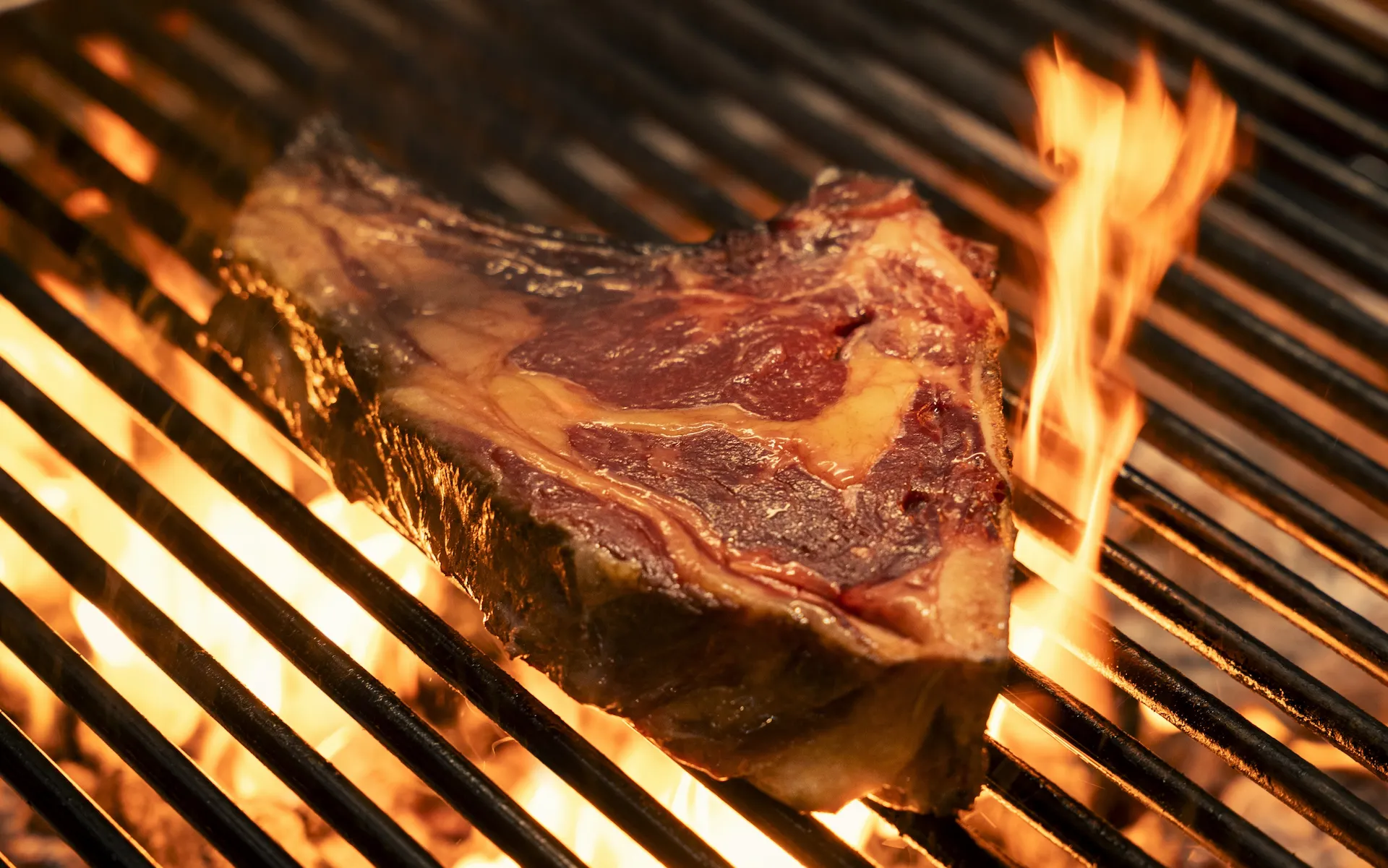
The dark exterior crust that forms during the process—called the bark—is not waste but protection. It's removed at butchering, revealing intensely coloured, almost garnet meat with a texture visibly different from a fresh cut. In that first cut, the ager knows whether the process has worked.
The breeds we age at Carbònic
Not every animal is a candidate for this process. You need sufficient exterior fat coverage to protect the meat during the weeks of rest, and intramuscular infiltration to guarantee final juiciness after moisture loss.
The breeds we work with have their own stories. The old Friesian cow—primarily a dairy breed—has a completely different profile from a young beef steer: well-used muscle, quality fat formed over years of active life, and a flavour that young animals simply cannot replicate. The Galician blonde, by contrast, is a native breed from northwest Spain with exceptional intramuscular fat infiltration that makes it an ideal candidate for long agings of 60 to 90 days, where the flavour reaches a depth that few meats in the world achieve. Both breeds share the same essential quality: they have truly lived—muscle with history, fat built over years of grazing.
Wet-aging vs dry-aging: the philosophical difference
The difference between wet-aging and dry-aging is more than technical: it's philosophical. Wet-aging—meat vacuum-packed in its own juices for days or weeks—is the industrial standard because there's no shrinkage, no space required, and the process is predictable. What it produces is tenderisation, but without flavour concentration or the development of complex aromatic compounds that only appear when meat breathes. Dry-aging is slower, more expensive, and demands daily attention. That's exactly what makes it better.
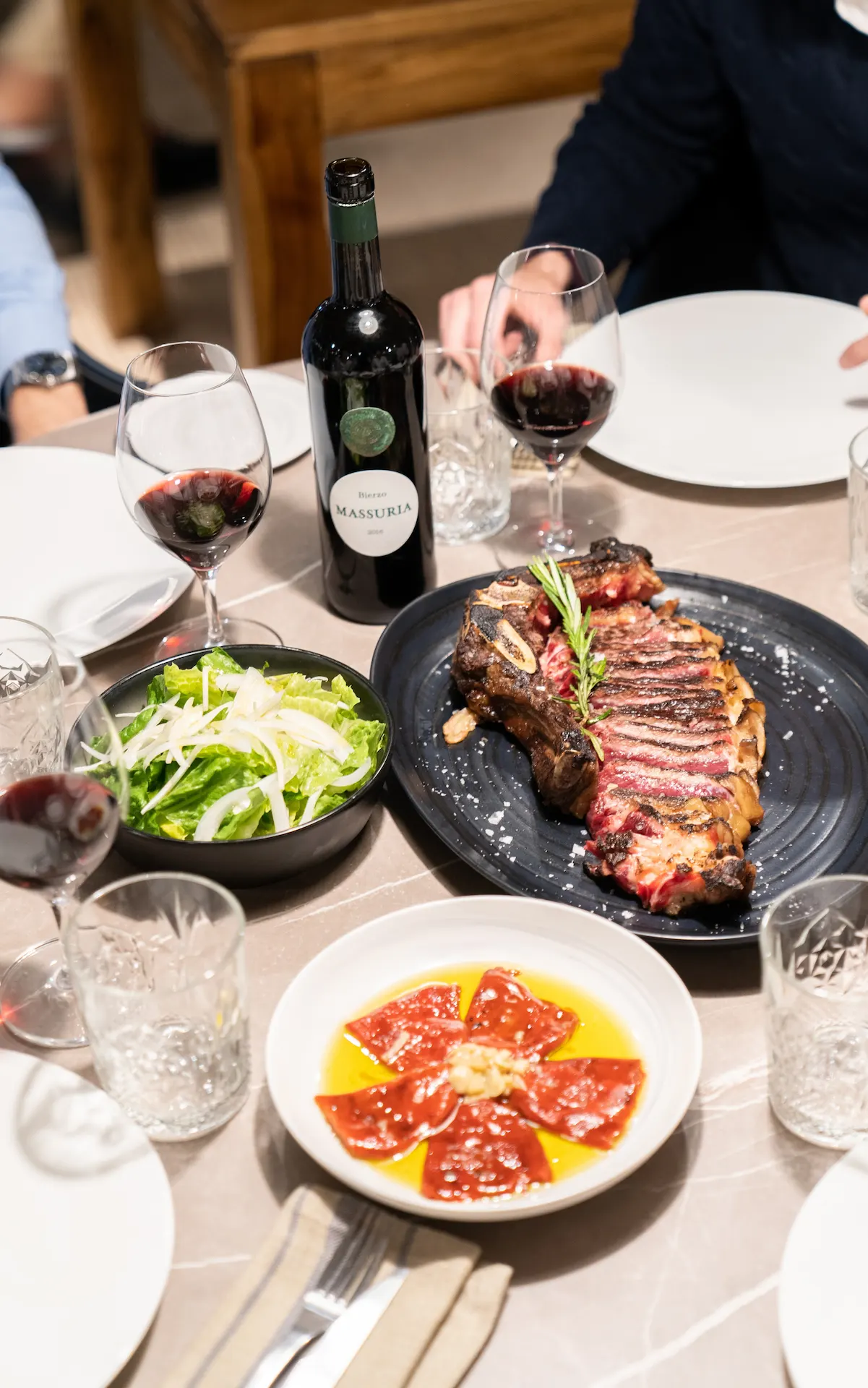
In the kitchen we cook these pieces over holm oak charcoal at high heat, seeking a crust that seals the juices and contrasts with the tender interior. The right point is crucial: too well done and you lose the complexity that time has built; too rare and the texture hasn't reached its full potential. Between vivid red and deep pink lies the balance we seek every night.
How to identify a well-executed aging
For those who want to identify a well-executed aging on the plate: the meat should present a darker colour than a fresh cut, somewhere between garnet and burgundy. On the slice, the texture is noticeably more tender without disintegrating. The flavour is more intense across all registers—more umami, more complex—and the aftertaste is long. If dry-aged beef simply tastes like softer meat, the process didn't go far enough or the starting cut didn't have the right profile.
The colour of the fat is another indicator: in a correct aging, the exterior fat acquires tones between ivory and pale yellow, with a firm texture that contrasts with the softness it will have on the palate once cooked. The nose is the best evaluation instrument: complex, deep notes must be present, without acidic or putrid deviations. Well-executed aged meat smells of concentration, not deterioration.
If you want to see which aged beef cuts we have on the menu, we explain it all there.
By
Jordi PereraCo-founder · Carbònic Restaurant, Salou
Jordi Perera is co-founder of Carbònic Restaurant. With a long career in hospitality, he writes about gastronomy, dry-aged meats, wines and the culture of fire and the grill on the Costa Dorada.
Has it whetted your appetite? Come and discover it in person.
Book a tableDiscover the philosophy behind every dish that comes from our grill.
Our complete grill and fire proposal in Salou →