“Amazing food, huge bottles of wine! Tbone steak cooked to perfection and attentive staff, highly recommend. We booked beforehand, others arriving had around a 20minute wait.”
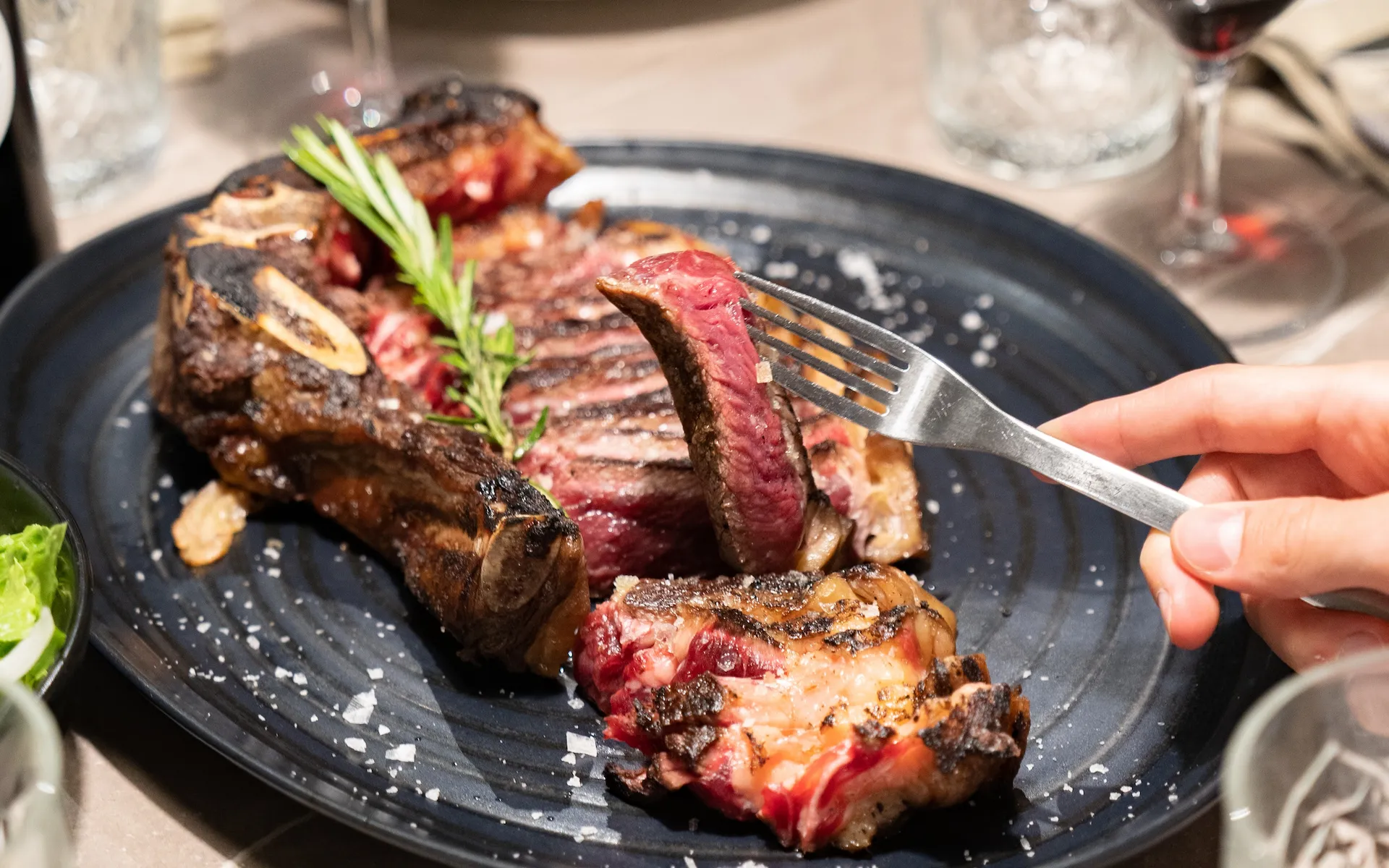
Old-cow Friesian & Holstein · Costa Dorada steakhouse
Dry-Aged Beef Over Live Fire · Restaurant in Salou
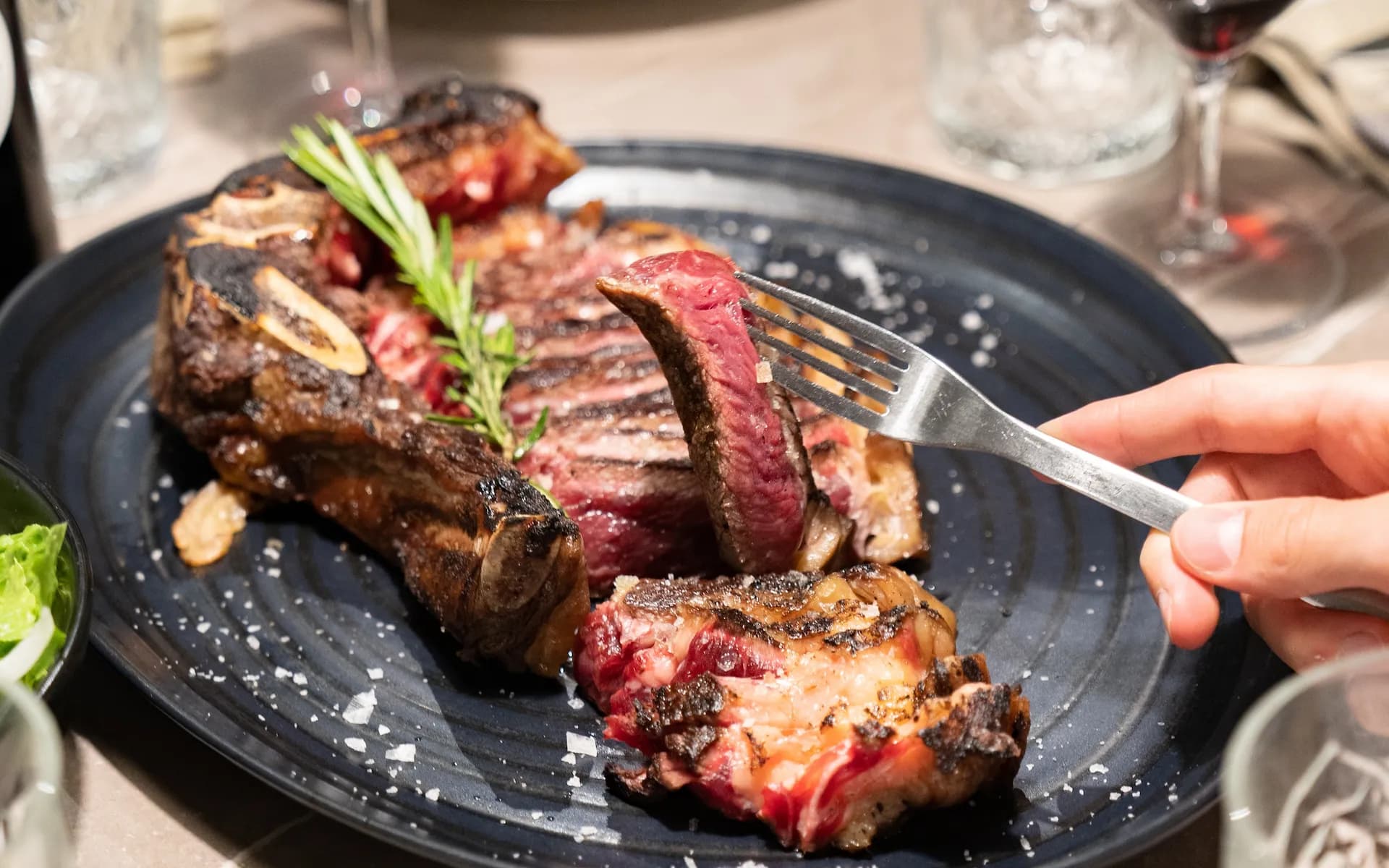
Book a tableAt Carbònic dry-aged beef is not a trend: it is a patient process that begins weeks before the piece reaches the grill. We work with old-cow Friesian and Holstein raised free-range, selected for marbling, age and behaviour in dry maturation. Our dry-aging range runs from 25 to 40 days in a controlled chamber depending on the cut — the exact time needed for the meat to gain in tenderness and flavour without taking on notes foreign to the meat itself. At our Salou steakhouse — in the heart of the Costa Dorada — we cook this beef over holm-oak charcoal, where the fire respects the work of time. It is what you look for when you order a real chuletón.
The science
What happens during dry-aging
Dry-aging is a controlled enzymatic process. When a piece of beef hangs in a chamber at a constant temperature between 1 and 3 degrees Celsius, with humidity around 70-80% and specific ventilation, three transformations occur simultaneously: moisture loss, muscle fibre breakdown and aromatic development. Moisture loss — between 15% and 25% in the first 30 days — concentrates flavour naturally. The intramuscular fat that creates the marbling gains presence in every bite because the surrounding muscle has shrunk. This is why a ribeye aged 30 days tastes more intense than one from the same animal cooked fresh. The fibre breakdown is done by the muscle's own enzymes: calpains and cathepsins. These proteins act on collagen and myofibrils, tenderising them progressively. This is why a properly aged beef is so buttery: it is not soft from cooking, it is soft because time has done the work. Aromatic development is the hardest to explain without tasting. Notes emerge that recall aged cheese, nuts, browned butter. These are volatile compounds that only surface after weeks of slow, controlled maturation. At Carbònic we hand-select each piece from the supplier. We work with cattle at least six years old, raised in the open air, with abundant marbling and a natural pasture-and-grain diet. We calibrate aging time cut by cut: T-Bone at 25 days — the maximum the tenderloin will tolerate; ribeye (chuletón) and chuleta between 30 and 40, depending on the piece. Beyond that range the meat starts taking on notes from the chamber itself — sharp aged cheese, ammoniacal hints — that stop being intrinsic to the beef. We would rather have you recognise the meat, not the process. The fire does the rest. Holm-oak charcoal reaches 400 °C in the direct heat zone: it sears the surface in seconds, forms the caramelized Maillard crust and respects the pink interior. It is the only step of the process that lasts minutes. Everything else is counted in weeks.
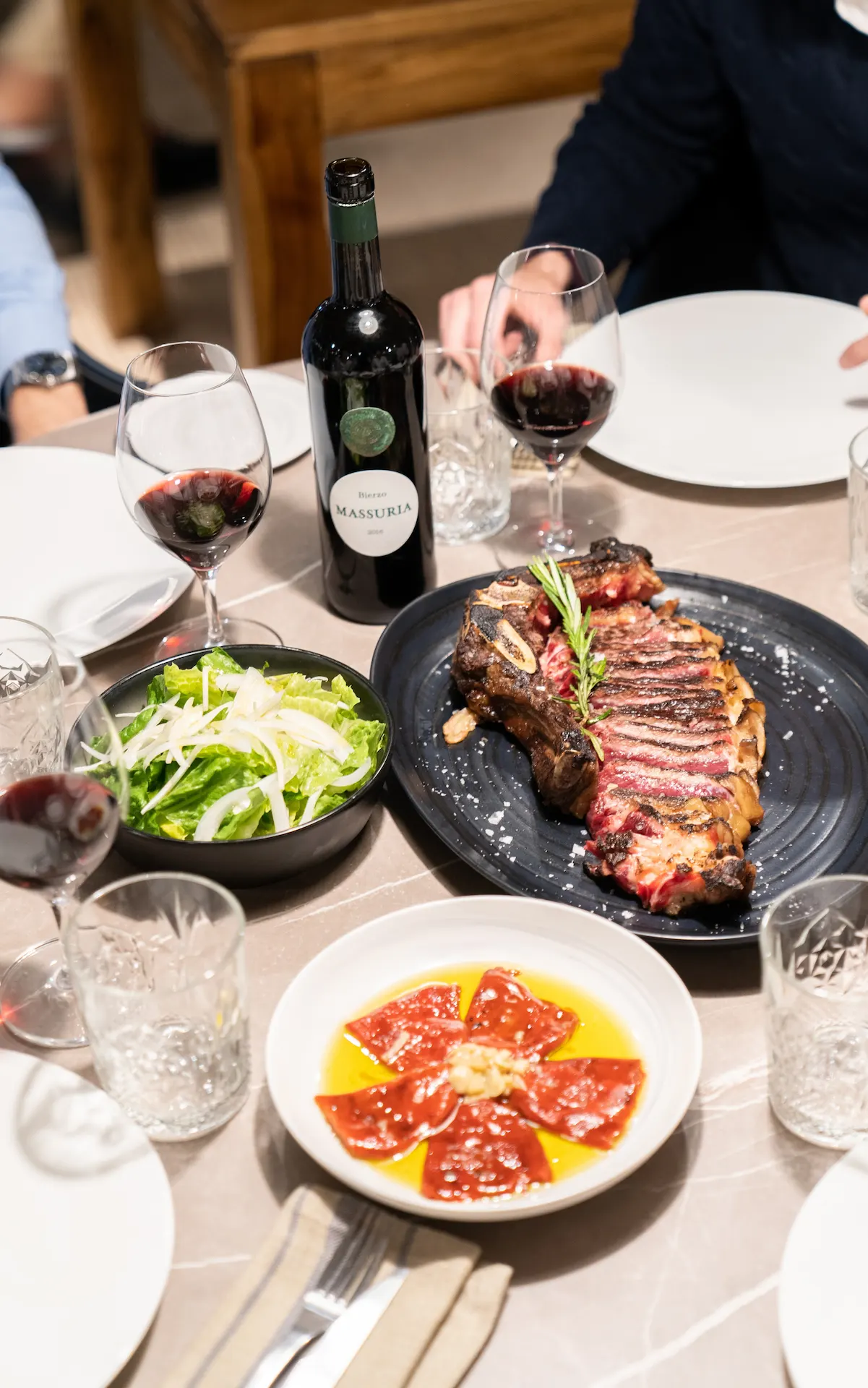
House cuts
Three ways to taste old-cow beef
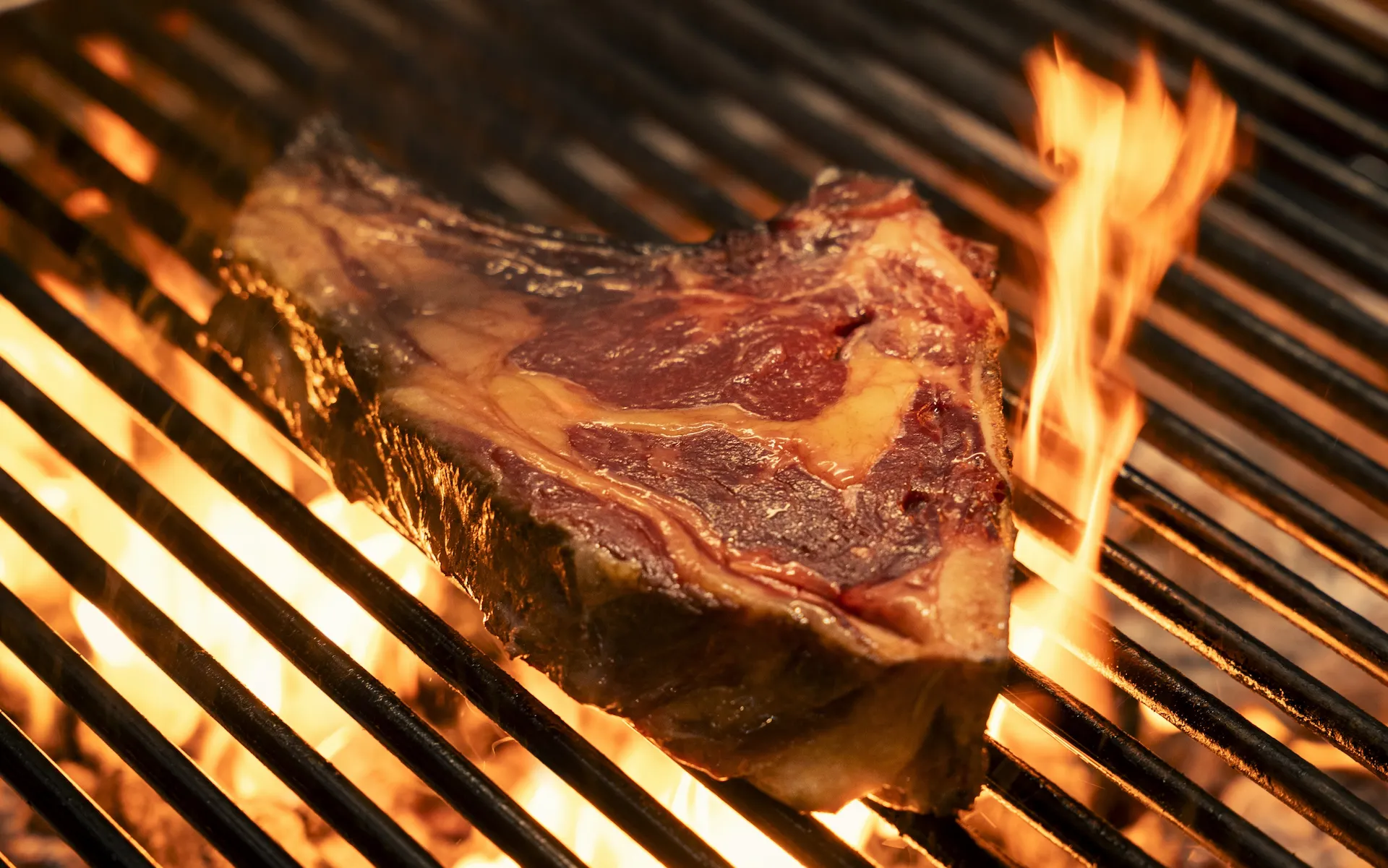
Chuletón (Bone-In Ribeye for Two)
Bone-in ribeye cut from lomo alto, around 1 kg — designed to share between two. Friesian and Holstein at least six years old, aged 30 to 40 days depending on the piece. The centrepiece of the grill: abundant marbling, bone, and a caramelized crust. Served with flake salt; sides are ordered separately.
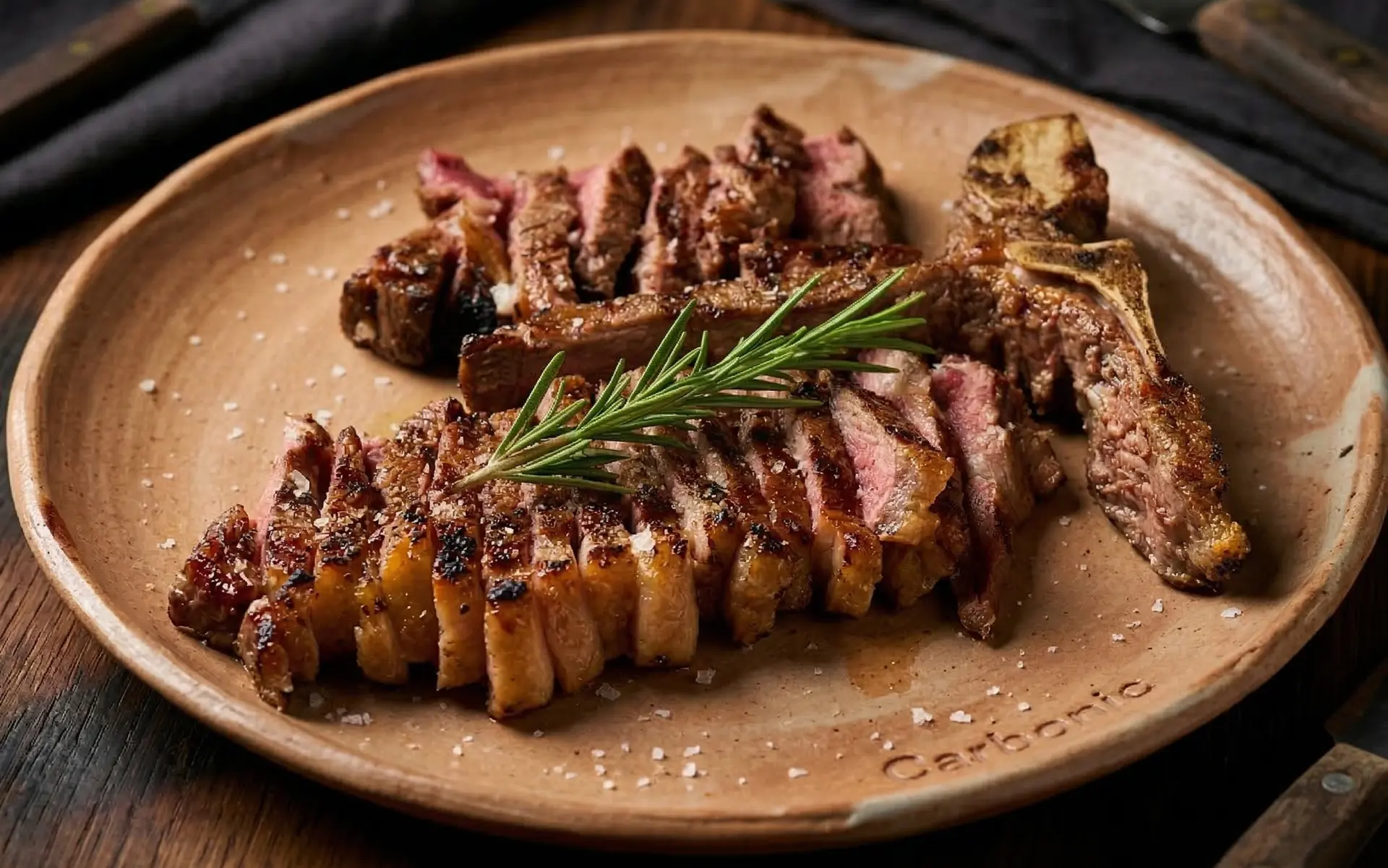
Dry-Aged T-Bone
Tenderloin and lomo bajo (strip loin) separated by the T-shaped bone, around 0.8 kg. Aged 25 days — the maximum the tenderloin will tolerate. Two contrasting textures on either side of the bone, served medium-rare to respect the character of each muscle.
Dry-Aged Chuleta
Two things set it apart from the chuletón: it is lomo bajo (not lomo alto) and around 0.4 kg (not 1 kg) — designed as an individual portion. Hence a tighter grain and a cleaner flavour. Same cow, same chamber: 30 to 40 days of aging.
Reviews
What our guests say
4.6/5 on Google (1,957) · 4.5/5 on TripAdvisor (257)
“Muy buena experiencia y atención. Las carnes a las brasas, mi debilidad.”
Ready to book for old-cow beef?
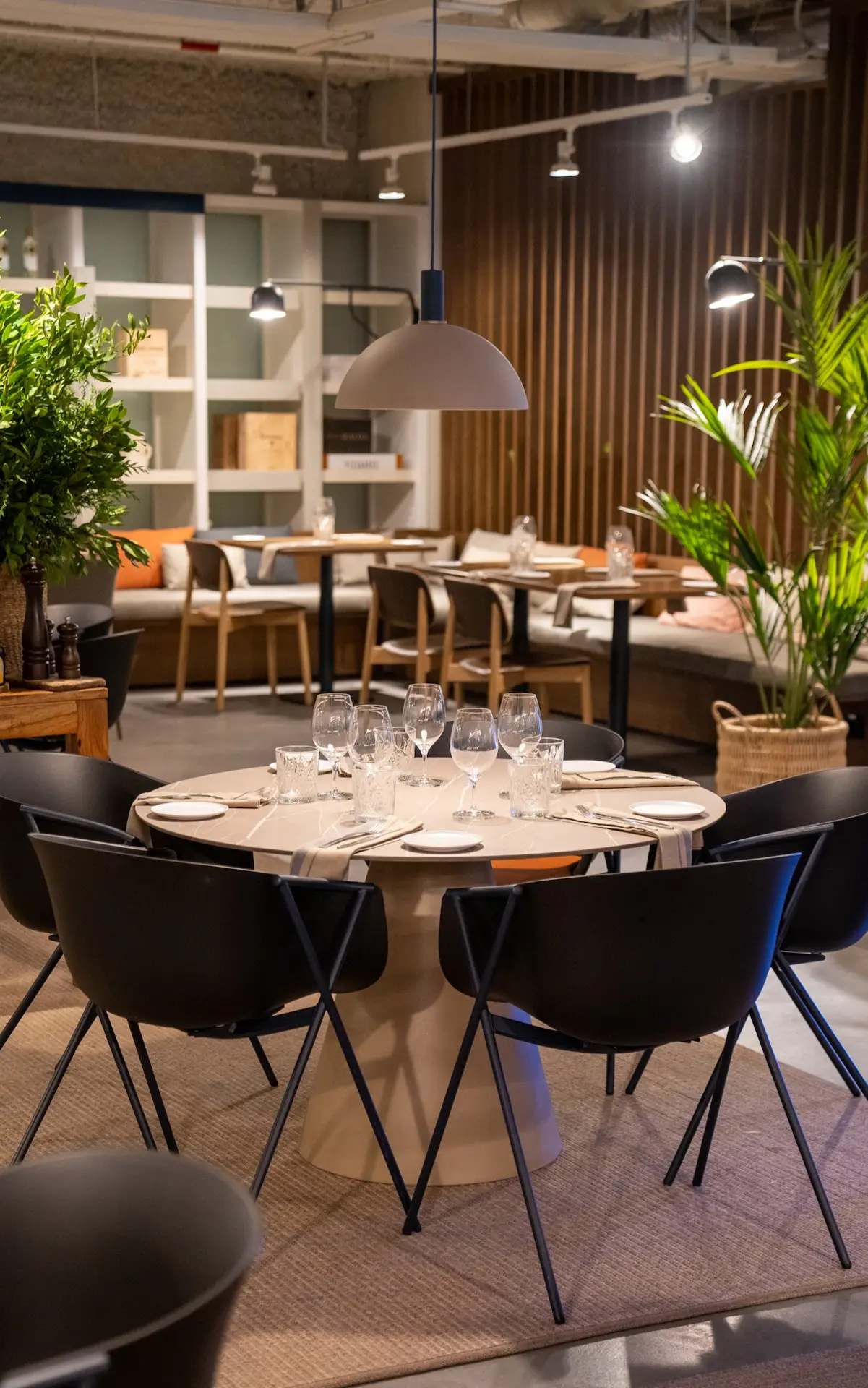
Open for lunch and dinner. We recommend booking at weekends. Premium cuts are served subject to daily availability.
Frequently asked questions
Have questions?
Dry-aging is the process of hanging a piece of beef in a controlled chamber at 1-3 °C, 70-80% humidity and specific ventilation for weeks. During that time the meat loses 15% to 25% of its moisture, the muscle's own enzymes (calpains and cathepsins) break down the fibres, and complex aromatic compounds develop. The result: concentrated flavour, buttery texture, and notes reminiscent of aged cheese or nuts.
Our range runs from 25 to 40 days, calibrated cut by cut. T-Bone is aged 25 days — the maximum the tenderloin will tolerate. Chuletón and chuleta sit between 30 and 40, depending on how the piece evolves. Beyond that range the beef starts taking on notes from the chamber itself — sharp aged cheese, ammoniacal hints — that stop being intrinsic to the meat. We prefer to stop at the point where the beef improves without losing its character.
We work mainly with Friesian and Holstein, dairy breeds that from six years of age onwards develop exceptional intramuscular fat infiltration. Old-cow beef gives the marbling that creates the buttery texture and deep flavour we look for — something a young heifer does not deliver. We source cattle raised free-range on a natural pasture-and-grain diet.
Over holm-oak charcoal in an open grill oven. The direct heat zone reaches 400 °C, which sears the surface in seconds and forms the caramelized Maillard crust. We then move the piece to a less intense zone to let the heat finish crossing the meat without aggression. The default doneness is medium-rare — pink and juicy — but we can adjust to your preference.
The chuletón (~1 kg piece, bone-in lomo alto) is designed to share between two diners. If you are dining alone, chuleta is the individual option: bone-in lomo bajo, around 0.4 kg, same cow and same chamber, aged 30 to 40 days. Sides are ordered separately so each table picks its own.
Fresh beef serves the piece a few days after slaughter, when the muscle is still in its original texture and flavour. Dry-aged beef has spent weeks in a controlled chamber, losing moisture, changing texture through enzymatic action, and developing new aromas. The main difference is intensity: dry-aged beef concentrates flavour, becomes buttery on the palate, and takes on that deep note — cheese, butter, nuts — that fresh beef cannot have. They are different experiences; if you are after the intense flavour that makes northern steakhouses famous, that is dry-aging.
How to find us
Visit us in Salou
Kitchen hours
Mon–Thu 13:00–15:00 · 18:30–22:00 | Fri 13:00–15:15 · 19:00–22:30 | Sat 13:00–15:30 · 19:00–22:30 | Sun 13:00–15:30 · 18:30–22:00
Lounge: Sun–Thu 12:30–00:30 · Fri–Sat 12:30–01:00
Phone
977 07 59 61