Australian wagyu picanha and our ponzu sauce
Some cuts arrive at the grill with everything settled. Others arrive with a question. The Tajima Australian wagyu picanha belongs to the second group: a cut of South American tradition, of Tajima bloodline, raised in Australia and served in Salou with a sauce we adjust in our own kitchen. None of that explains itself, so let us explain it.
Riverina, New South Wales
The beef comes from Tajima, in the Riverina, in the Australian state of New South Wales. The name comes from the bloodline: Tajima is a wagyu line originating in Hyogo, Japan. What reaches us in Salou, however, was raised in Australia.
That double origin — the genetics from one side of the world, the grain from the other — is a good part of what ends up on the plate. This is not Japanese wagyu, and we are not going to call it that.
A cross, and we say so
Wagyu is a field where exaggeration comes easily, so it pays to be clear. This picanha is not fullblood and not purebred: it is a wagyu cross with angus and holstein, across generations ranging from F1 to F4. F1 is the first generation of the cross; F4, the fourth. Tajima works across that whole range.
We are not saying this as a warning but as a spec sheet. A cross is not a watered-down version of anything: it is a different category, with its own behaviour over fire. And we think whoever sits down at the table has a right to know what they are eating.
Four hundred days on grain, on average
Tajima's cattle spend an average of 400 days on a grain diet: wheat, barley and oats. It is a long stretch, and it is what builds the intramuscular fat you later notice in the bite. There is no shortcut: that pattern of fat inside the muscle is made with time or it is not made at all.
To that figure Tajima adds two more that matter to us as much as the marbling: no added hormones, and full traceability of the animals. When you buy beef from the other side of the world, being able to follow the trail of the piece is not a bonus — it is the minimum condition.
Tajima took one gold medal and two silvers at the 2026 World Steak Challenge.
Marbling of 6 or above
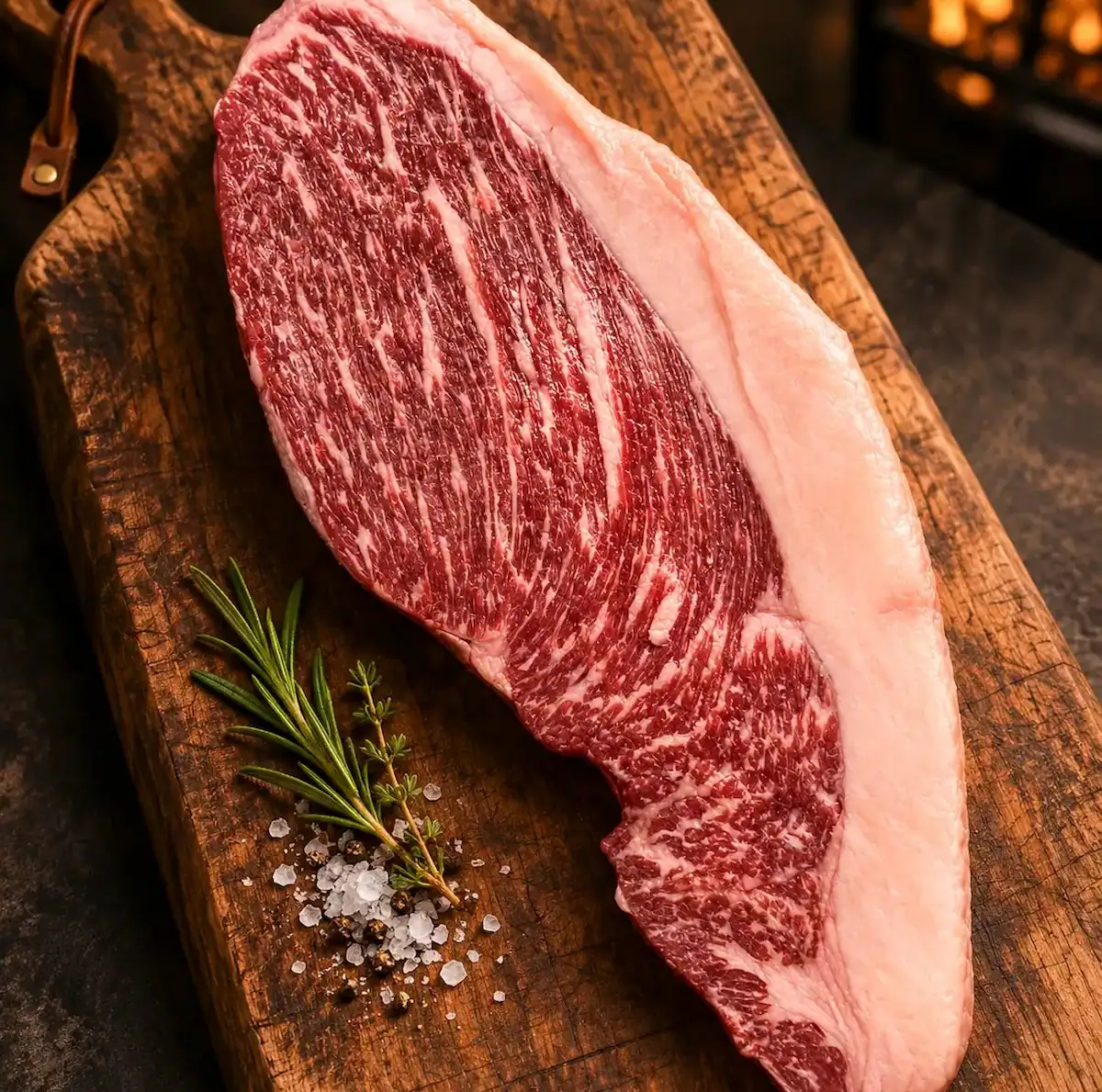
Tajima grades its pieces on the Australian marbling scale and, depending on the cut, ranges from 4 to 9+. The one we buy has a marbling score of 6 or above.
We do not translate that number into any Japanese scale, because it does not belong there: they are different systems, and mixing them only serves to inflate the description. What 6 or above does mean, in practice, is a piece that starts releasing fat the moment it meets the heat.
The cut: the fat is inside and outside
Picanha has a particularity that sets it apart from a ribeye or a bone-in chop. Beyond the marbling, it keeps a fat cap on one of its faces. That layer is not a trimming oversight: it is the cut.
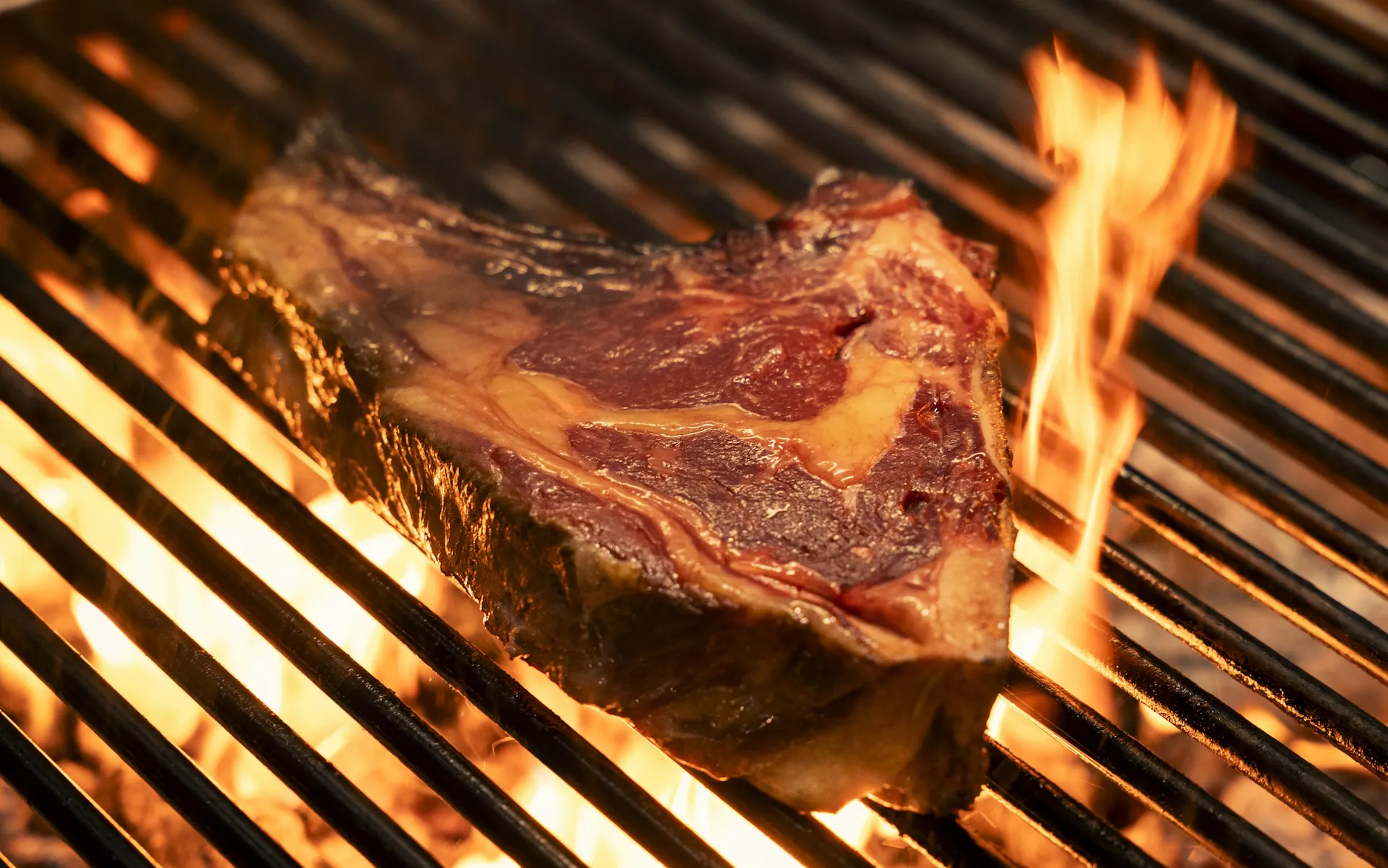
Over the coals, that fat cap melts slowly and soaks the meat beside it. It does half the work on its own. Which is why picanha is a cut that rewards direct fire and punishes haste.
On the grill: oak charcoal and medium rare
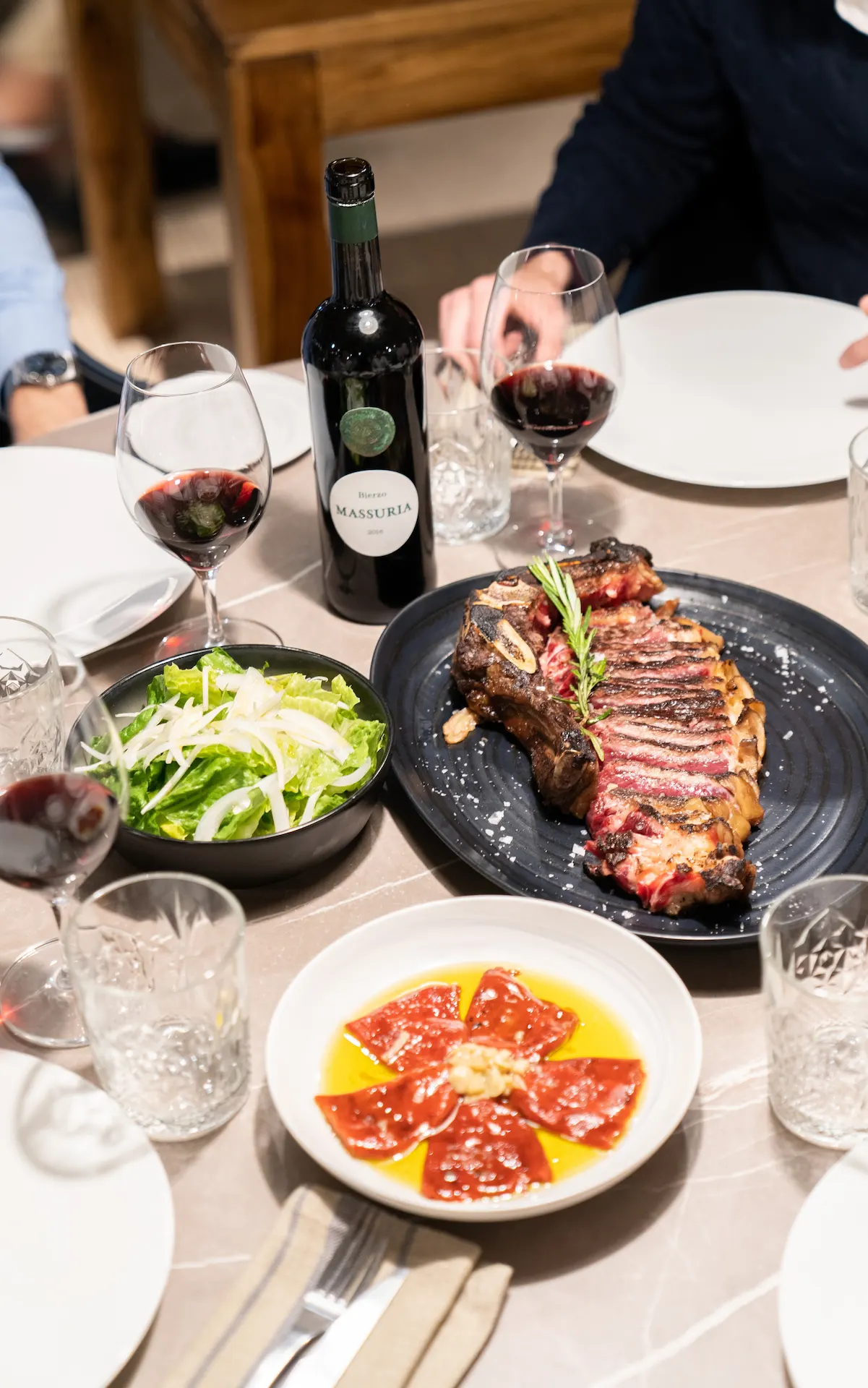
We cook it the way we cook everything at Carbònic: over oak charcoal, with that dry heat that sears fast and leaves the inside where it should be.
And we have one specific recommendation, the same one we give at the table: ask for it medium rare. It is not a kitchen whim: the marbling of this wagyu needs heat to activate, but it goes past the point very quickly, and medium rare is exactly where the fat is still unctuous rather than gone altogether.
Our ponzu: soy, orange, lime and mirin
We serve it with our ponzu, and we say our deliberately. It is not the traditional Japanese recipe: it is a house version, made with soy sauce, orange juice, lime juice and mirin.
The reason for the pairing is simple. Beef with this level of intramuscular fat coats the palate, and by the third bite everything starts to taste the same. The citrus and the acidity of the ponzu cut through that richness and return the palate to its starting point. The soy and the mirin provide the salty, sweet base that holds the meat up; the orange and the lime do the rest.
It is probably the dish on our menu where it is clearest that a sauce can be something other than a garnish.
Ask for it medium rare
Tajima bloodline raised in Australia, four hundred days on grain on average, oak charcoal and a house ponzu. The rest happens at the table: ask for it medium rare and let the fat and the citrus do their job.
By
Jordi PereraCo-founder · Carbònic Restaurant, Salou
Jordi Perera is co-founder of Carbònic Restaurant. With a long career in hospitality, he writes about gastronomy, dry-aged meats, wines and the culture of fire and the grill on the Costa Dorada.
Has it whetted your appetite? Come and discover it in person.
Book a tableDiscover the philosophy behind every dish that comes from our grill.
Our complete grill and fire proposal in Salou →