“A lovely restaurant in an unlikely location. The food and service was exceptional and reasonably priced compared with other (mediocre) restaurants in Salou. I ate well as a vegetarian and members of our group enjoyed tasting the top grade wagyu beef. It was a lovely experience made better by the staff, who couldn't do enough for you and were extremely attentive. A must visit when in Salou!”
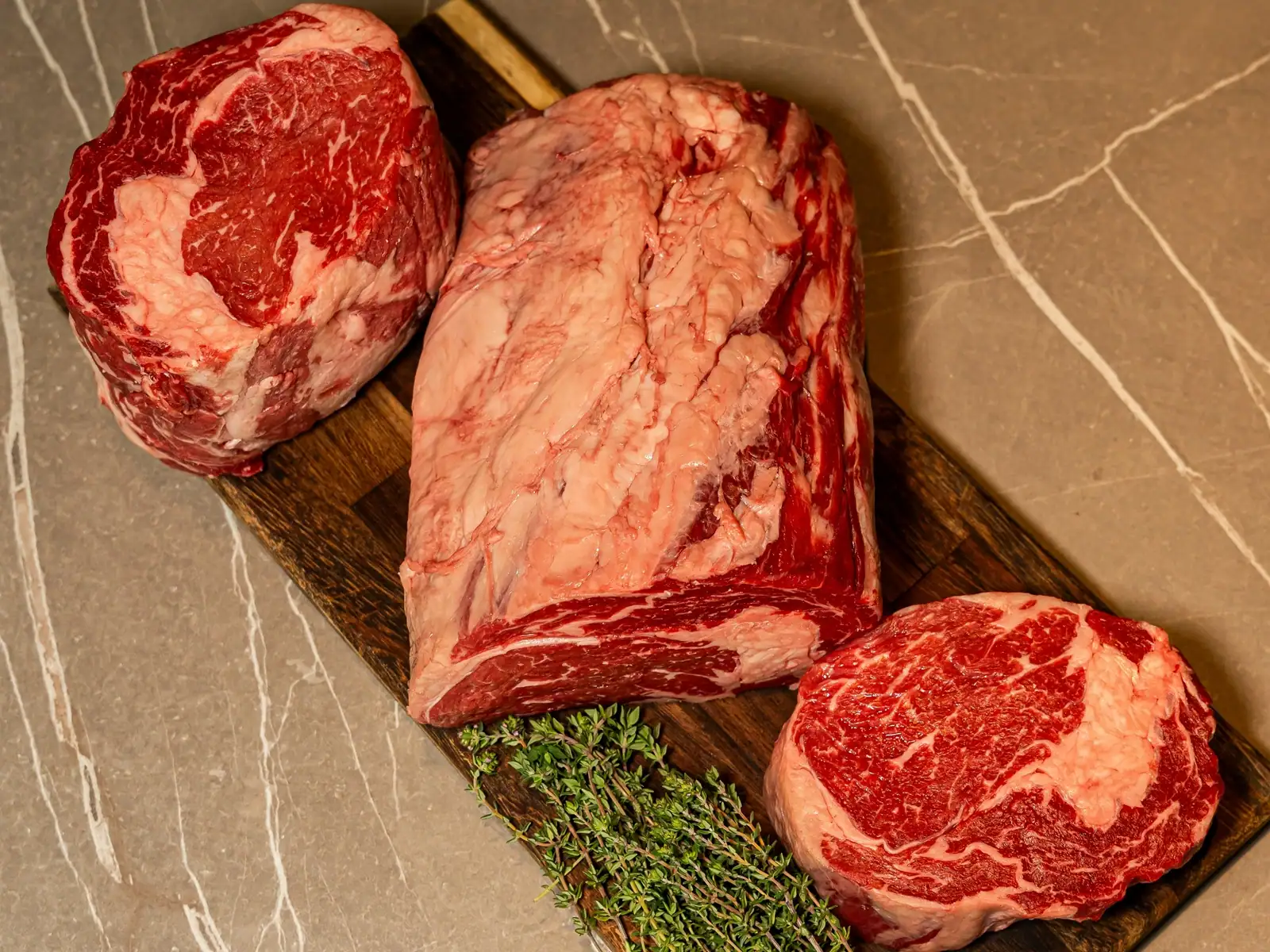
Uruguayan Angus-Aberdeen · Japanese Wagyu Kagoshima A5+
Angus and Wagyu in Salou · Premium Imported Beef
Book a tableAt Carbònic there are two parallel beef philosophies: old-cow dry-aged in our own chamber, and premium imported cuts that arrive unaged because they do not need it. Their sourcing is what makes them exceptional. We work with two very specific origins: Angus-Aberdeen from Uruguay (a supplier with four generations of traceability and a World Steak Challenge gold medal) and Wagyu from Kagoshima, Japan, at grade A5+ and BMS 12 — the highest marbling on the Japanese scale. Both are served over holm-oak charcoal at our steakhouse in the heart of Salou, on the Costa Dorada. Exceptional product, no artifice, no years of aging ahead: what matters is the selection.
The philosophy
Origin versus time
At Carbònic the debate between dry-aged beef and fresh beef is not a choice: it is a menu. Both approaches coexist, and they are different answers to the same question — what do we do to bring this product to the grill in its best form? For the old-cow Friesian and Holstein we work with time: 25 to 40 days of dry aging in our own chamber, calibrated cut by cut. The age of the animal brings the depth, and the chamber concentrates the aromas. For the Uruguayan Angus and the Japanese Wagyu we work with origin: these are cuts that already arrive at their peak because their story began long before our storeroom. These two meats are not dry-aged at Carbònic — they do not need it. The Uruguayan Angus-Aberdeen comes from Frigorífico Las Piedras, in Canelones, close to the Atlantic coast. It is a supplier with four generations of tradition, ESG certification and a gold medal at the World Steak Challenge. Its Aberdeen Angus cattle spend around 200 days grain-finished in the final phase, which is what delivers that intense marbling and the clean, sweet flavour you recognise in good Angus. The resulting texture is tender without needing to age the piece: young, well-fed muscle with Angus genetics already gives an exceptional result on the grill. The Kagoshima Wagyu is another level. Wagyu literally means "Japanese cow" and designates four native breeds, the finest of which is the Kuroge Washu (Japanese Black). Kagoshima, in southern Japan, is one of the four most prestigious Wagyu prefectures. A5 is the highest quality grade under the Japanese system (evaluated by colour, texture and intramuscular fat). BMS — Beef Marbling Standard — measures marbling on a 1 to 12 scale, and ours is BMS 12: the highest possible. Translated: the intramuscular fat is so deeply infiltrated in the muscle that the cooked piece looks nearly white with marbling. On the grill it melts at lower temperatures than the rest of the meat, which demands specific treatment: quick cooking, smaller portion, immediate service. There is no "better" between origin and time. There are two different disciplines for two different products. The first — old-cow dry-aged — we do ourselves; the second — Angus and Wagyu — we recognise and respect without intervening. The holm-oak charcoal grill is the only common thread: the same fire, three different breeds, two complementary philosophies.
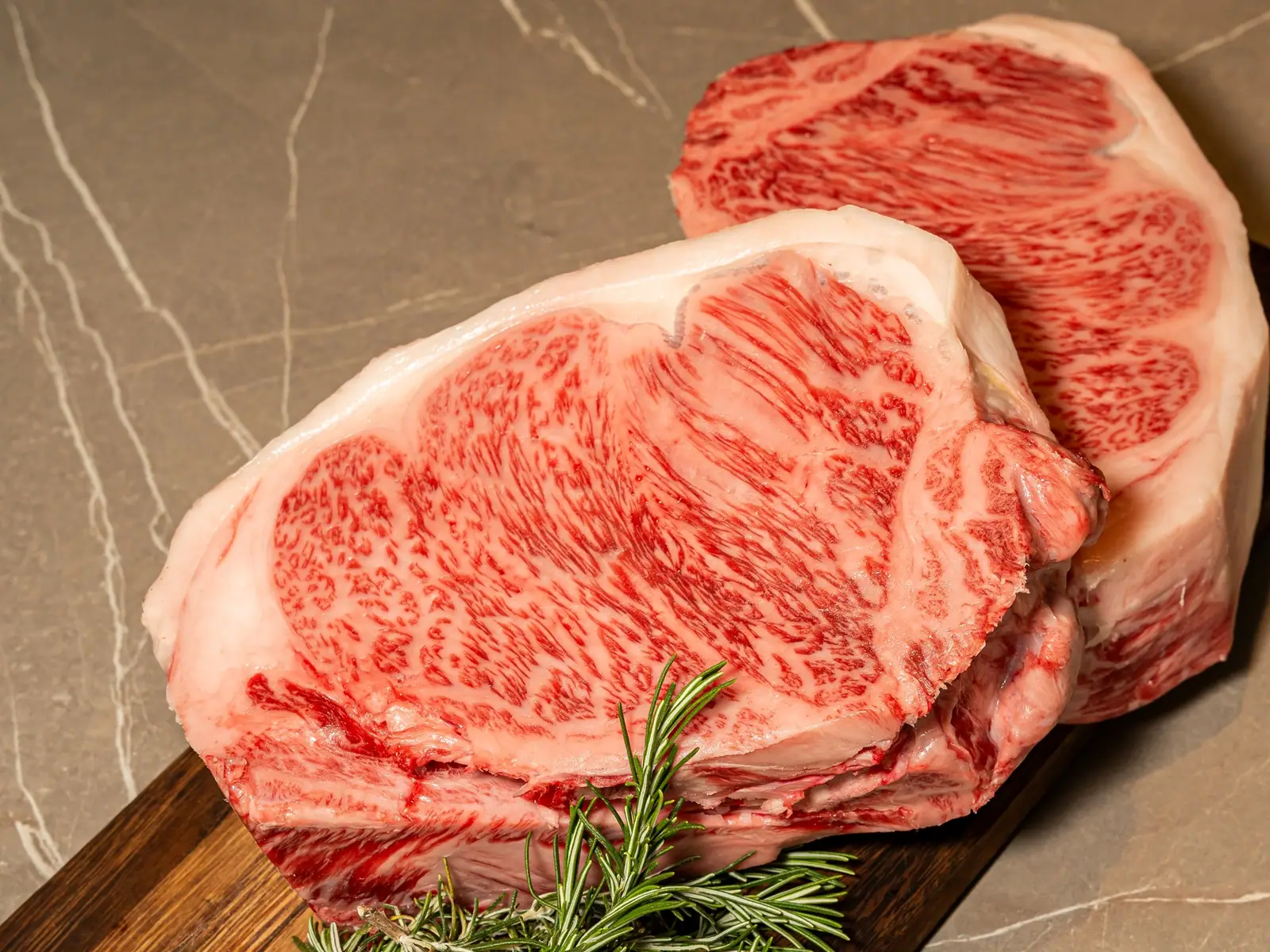
The three ribeye cuts
Uruguayan Angus and Kagoshima Wagyu
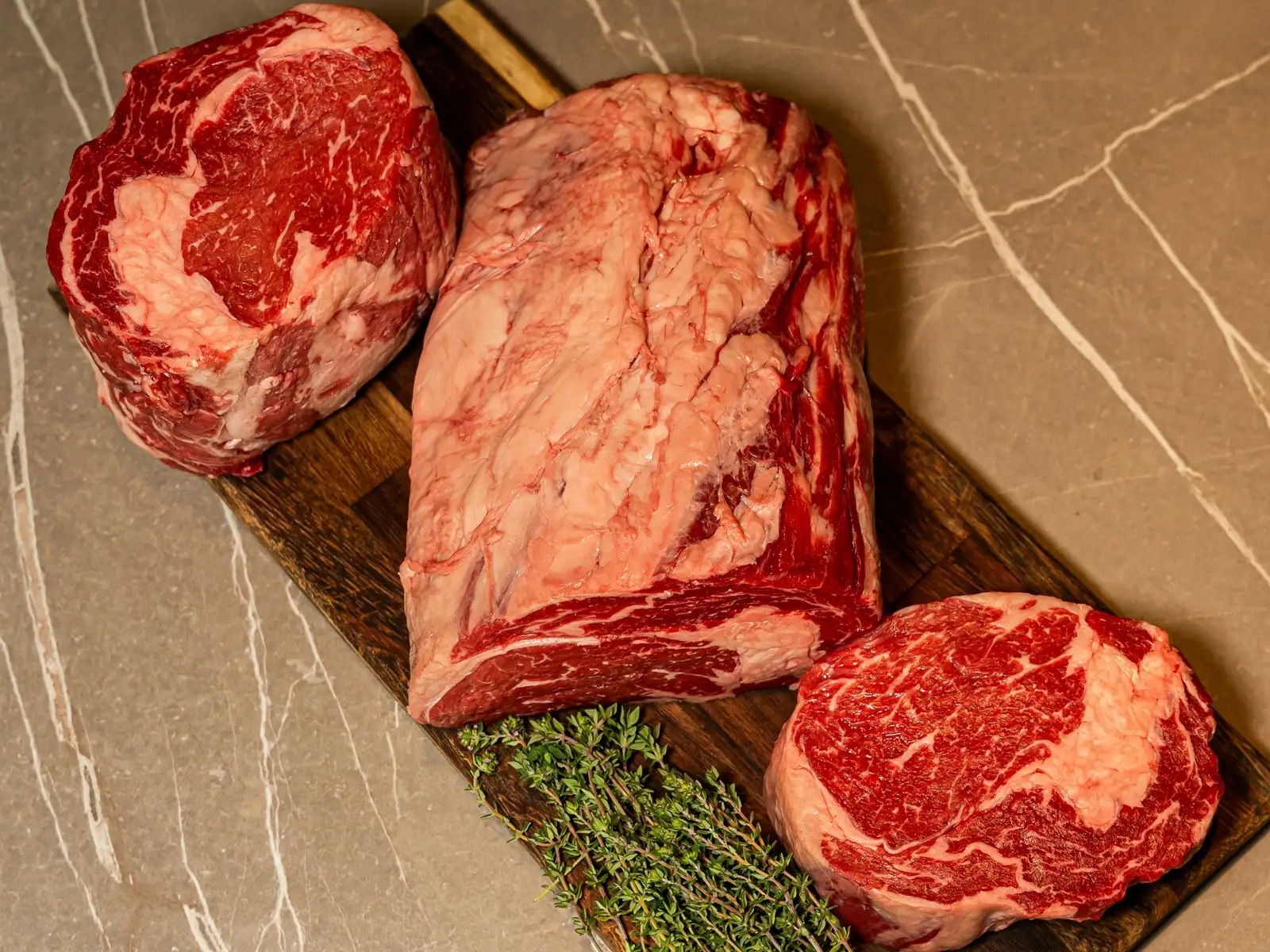
Angus-Aberdeen Ribeye · Lomo Alto
Boneless lomo alto ribeye, around 300 g. Uruguayan Angus-Aberdeen (Frigorífico Las Piedras, World Steak Challenge gold medal), roughly 200 days grain-finished. Intense marbling, clean and sweet flavour. Served medium-rare over holm-oak charcoal.
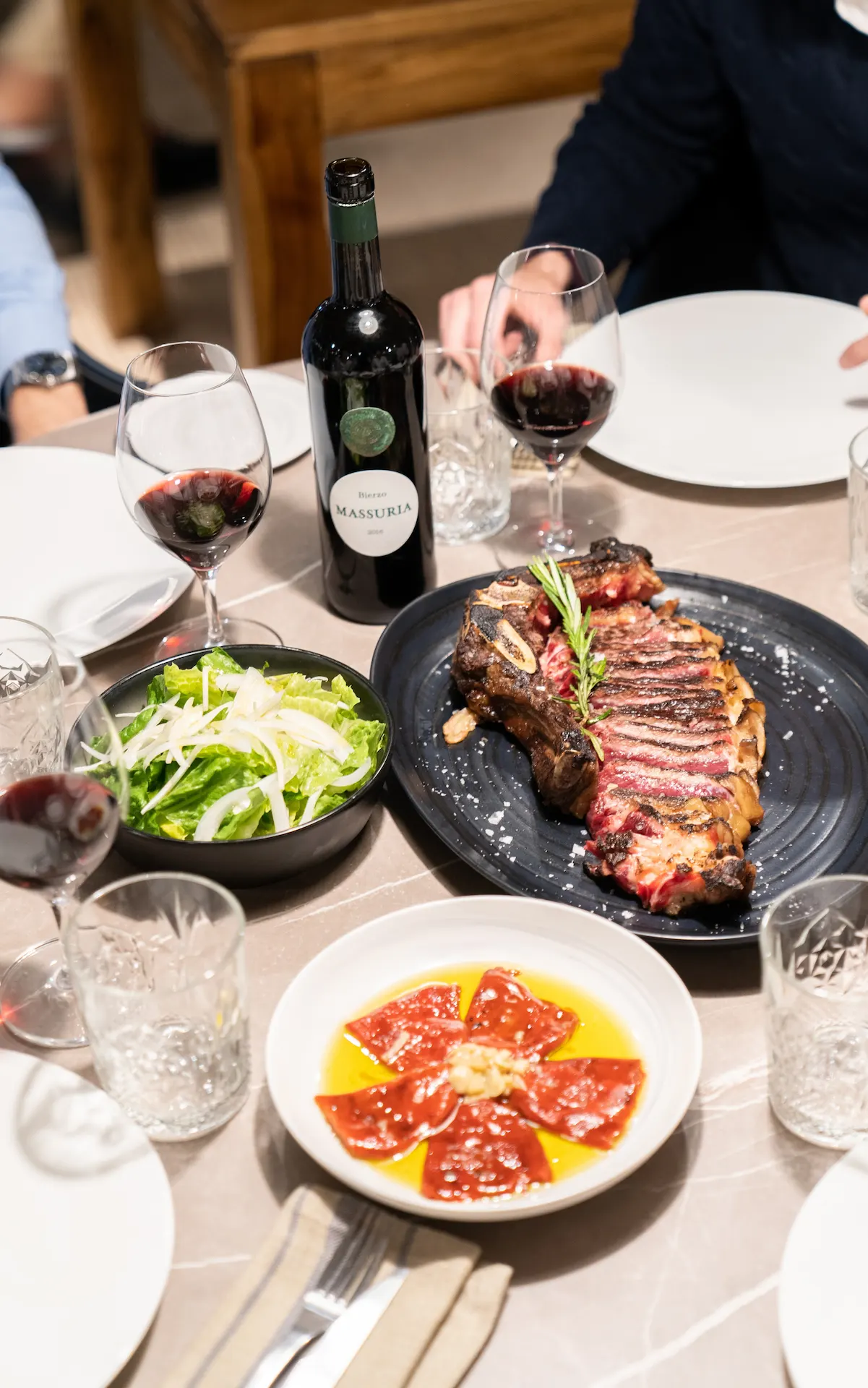
Angus-Aberdeen Ribeye · Lomo Bajo
Boneless lomo bajo strip loin, around 300 g. Same Uruguayan supplier as the lomo alto, same grain-finishing. Tighter grain and cleaner flavour: the Angus equivalent of what chuleta is to chuletón in old-cow beef. The lean texture you look for when marbling is not the top priority.
Wagyu Kagoshima Ribeye · A5+ BMS 12
Boneless lomo bajo cut, around 200 g. Japanese Wagyu from Kagoshima — one of the four most prestigious Wagyu prefectures — at grade A5+ and BMS 12, the maximum marbling the Japanese scale recognises. Exceptional flavour and texture; served in a small portion because the product itself demands it.
Reviews
What our guests say
4.6/5 on Google (1,957) · 4.5/5 on TripAdvisor (257)
Ready to book for Angus or Wagyu?
Open for lunch and dinner. We recommend booking at weekends. Wagyu is served subject to daily availability.
Frequently asked questions
Have questions?
Because they don't need it. Dry aging is applied to old-cow beef to work on tenderness, flavour concentration and aromatic development starting from mature muscle. The Uruguayan Angus already arrives with the tenderness and marbling delivered by Angus genetics and a 200-day grain-finishing phase; the Kagoshima Wagyu A5+ has such intramuscular fat infiltration (BMS 12, the maximum possible) that aging it would distort its profile. Two philosophies: we work with time on the old-cow beef, we respect the origin of the Angus and the Wagyu.
Two breeds and two beef cultures. Angus (Aberdeen Angus originally from Scotland, popularised as the reference beef breed in Uruguay, the US and Argentina) delivers a leaner meat with moderate marbling, clean and sweet flavour, tender texture without needing long aging. Wagyu (literally "Japanese cow", four native breeds fed in a highly specific way) delivers meat with extremely dense marbling: at grade A5+ BMS 12 the intramuscular fat is so high that the cooked piece has an almost buttery texture. Angus is "fantastic beef"; Wagyu A5+ is "infiltrated-fat experience". They are eaten in different portion sizes.
A5 is the highest quality category in the official Japanese Wagyu classification, evaluated on colour, texture, firmness and intramuscular fat. The "+" indicates selected cuts within grade A5. BMS (Beef Marbling Standard) specifically measures marbling on a 1-12 scale: 1 is lean with no marbling, 12 is the maximum marbling attainable. Our Kagoshima Wagyu is BMS 12 — the highest on the scale. In practice, the piece looks very white due to the amount of infiltrated fat, and that fat melts at a very low temperature.
The Angus ribeye (both lomo alto and lomo bajo) is an individual portion of around 300 grams. The Kagoshima Wagyu A5+ ribeye is a portion of roughly 200 grams, smaller because of the level of fat infiltration — a larger piece would be too much on the palate. Sides are ordered separately.
Over holm-oak charcoal in an open grill oven, the same as the old-cow dry-aged beef, but with specific treatment. The Angus is seared in the direct zone (300-400 °C) and finished in a less intense zone; default doneness is medium-rare but can be adjusted. Kagoshima Wagyu requires different treatment: quick cooking, a more marked sear on the surface, respect for the marbling inside. Because it is so heavily infiltrated with fat, it is served immediately and in small portions so the diner enjoys the melt without saturation.
Frigorífico Las Piedras, in Canelones (Uruguay), won gold at the World Steak Challenge — the world's most recognised international beef competition. It is a plant with four family generations, ESG certification and full traceability protocol from the paddock. Its Angus-Aberdeen has around 200 days of grain-finishing in the final phase, which delivers the marbling and clean flavour we look for. Its international recognition is a quality guarantee that does not depend on our judgement: the global industry has vouched for it.
How to find us
Visit us in Salou
Kitchen hours
Mon–Thu 13:00–15:00 · 18:30–22:00 | Fri 13:00–15:15 · 19:00–22:30 | Sat 13:00–15:30 · 19:00–22:30 | Sun 13:00–15:30 · 18:30–22:00
Lounge: Sun–Thu 12:30–00:30 · Fri–Sat 12:30–01:00
Phone
977 07 59 61