T-Bone grilled in Salou, the cut that has it all
Some cuts of meat need an introduction. Others arrive at the table and speak for themselves. The T-Bone belongs to the second category — though that wasn't always the case. When we opened Carbònic in July 2022, it was on the menu from day one. We believed in it. Our local clientele, however, kept a certain distance. The name was familiar — seen in photographs, in American TV shows — but it had little real presence on the grills of the Costa Daurada. Today it's one of our most reordered cuts. One of those slow, solid conversions that only great product can achieve.
The bone that defines everything
The name says everything and nothing at the same time. The T formed by the central bone isn't a decorative feature: it's the reason this cut exists as it does. On one side of the bone, the tenderloin. On the other, the strip. Two textures, two flavour profiles, one single piece. Those who know their meat understand it's almost a generous trap: you start on one side and find yourself returning to the other to compare. The experience shifts with every bite.
The T-Bone comes from the lower loin of the cow, precisely where the long dorsal muscle — the longissimus dorsi — begins to separate from the psoas major. That exact anatomy is what makes the cut possible: if the saw doesn't pass through exactly the right point, the tenderloin disappears or becomes something else entirely. There is no margin for error.
Central European Friesian: an origin that matters
The beef we work with at Carbònic comes from Friesian and Holstein cattle raised in Germany and Poland. A choice that might surprise those who associate quality beef with Atlantic breeds or the more celebrated names in the Spanish market.
The central European Friesian has a different morphology to the Rubia Gallega or the Angus. It's a dairy breed that transitions to meat production at the end of its productive life. What might seem like a limitation is, in practice, part of its character. Years of moderate muscle activity, a diet based on forage and pasture, and an accumulation of intramuscular fat that lacks the intensity of wagyu but delivers clean, honest juiciness — flavour without artifice.
The carcass arrives at our ageing chamber already carrying its own maturity. We chose this breed because it performs beautifully over live fire, and because its sensory profile fits the kind of heat we work with at Carbònic: direct, oak charcoal, no shortcuts.
Twenty-five days in the chamber
Before reaching the grill, every T-Bone spends twenty-five days in our dry-ageing chamber. That's not the longest we work with — some of our cuts reach forty-five or sixty days — but for central European Friesian it's the point where the meat finds its balance. Muscle fibre relaxes, collagen begins to break down, and flavour concentrates without reaching the more intense registers that longer ageing produces.
Over those twenty-five days, the surface of the piece develops a protective crust. This controlled loss of moisture — what the ageing world calls dry ageing — is something traditional butchers have always done, sometimes without a name for it. The result is a firmer exterior and a concentrated interior juiciness that no other method replicates.
Eight hundred grams to share
Our T-Bone weighs 800 grams. It's not a cut designed to eat alone — or at least, that's not how we think of it. It's a table cut: ordered, placed at the centre, shared. Something in its geometry — that prominent bone, that broad surface — invites conversation before the first bite is even taken.
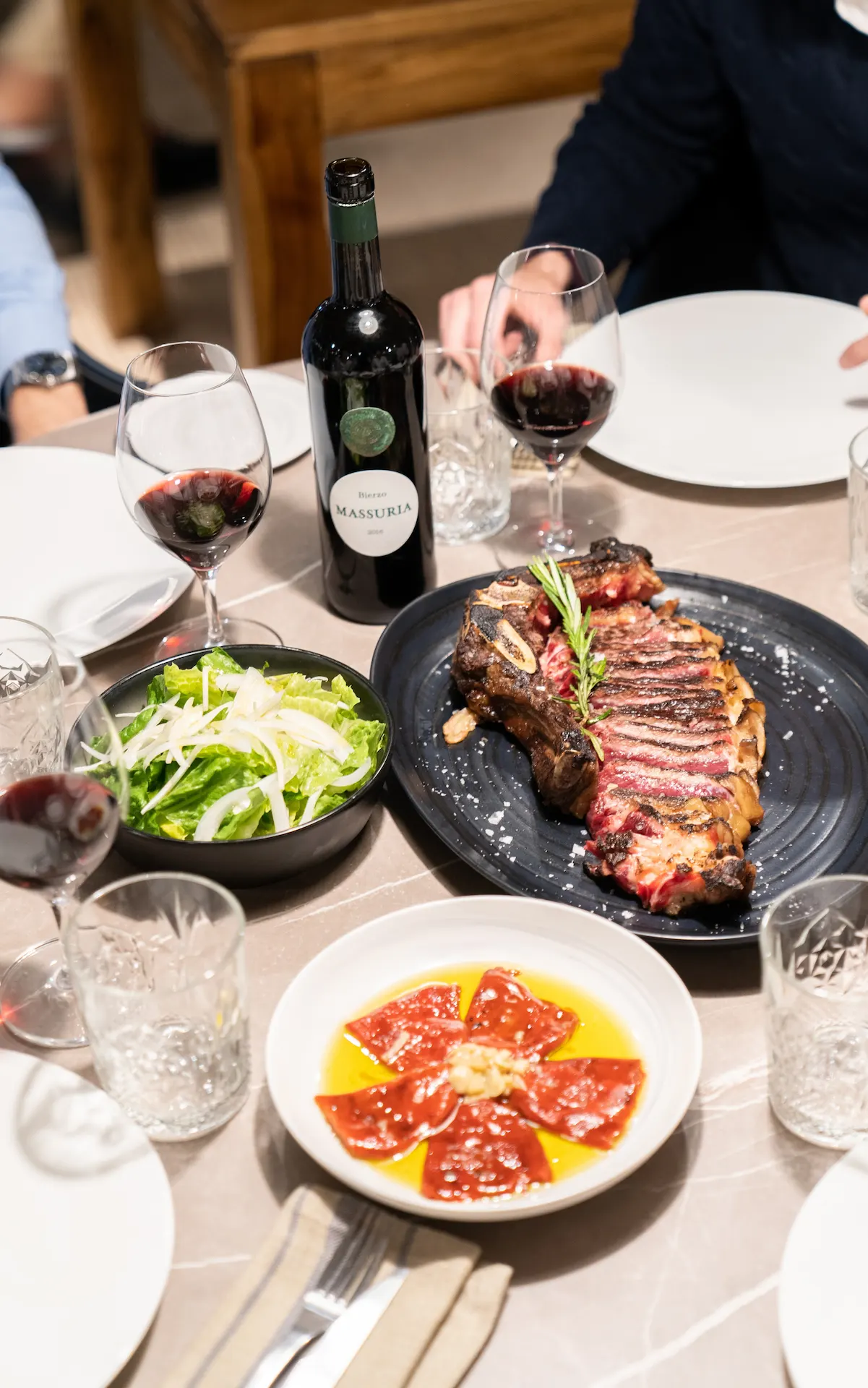
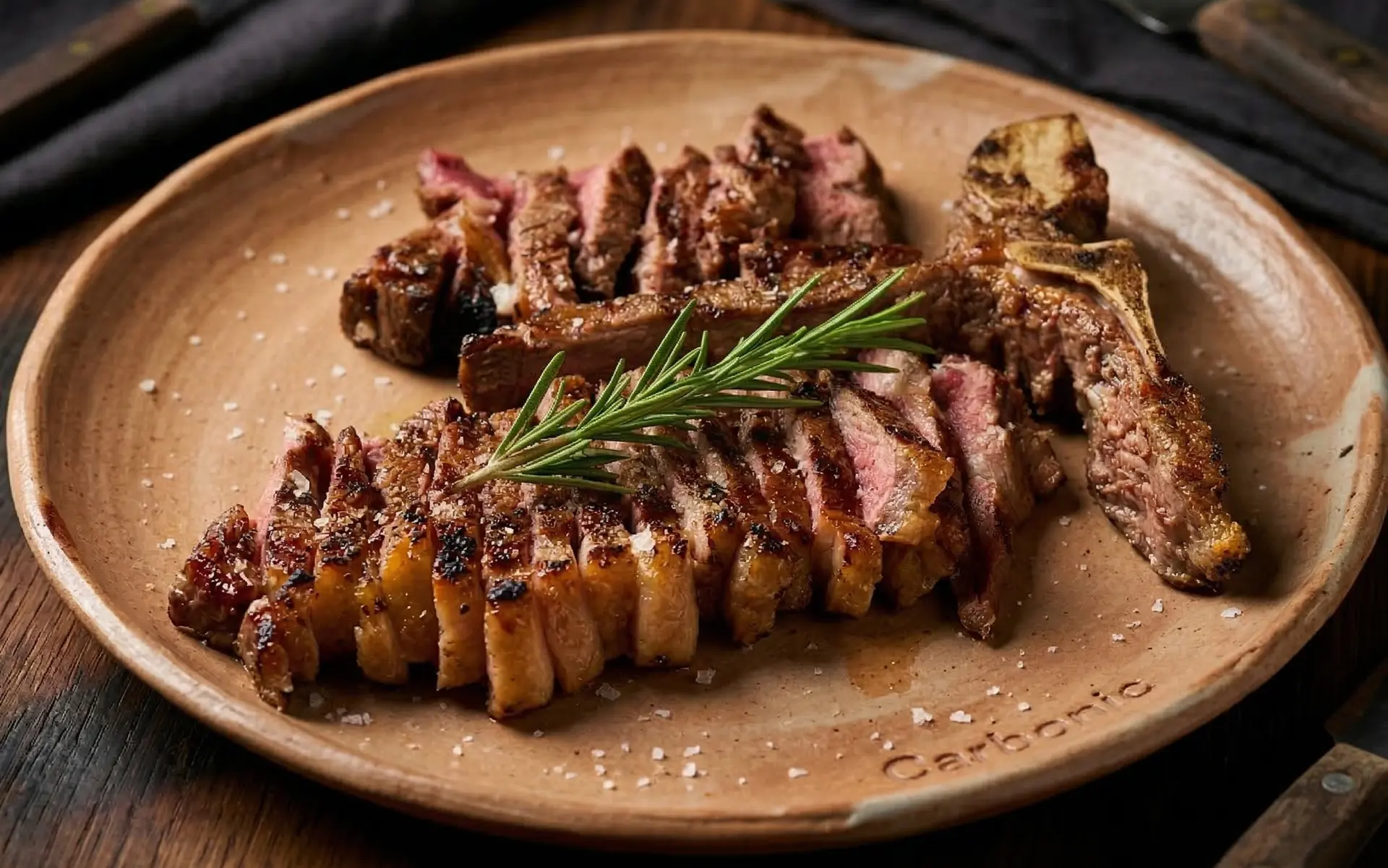
We serve it sliced alongside the bone, a gesture that makes eating easier without sacrificing the presence of the cut. Each slice carries a proportion of both tenderloin and strip, so those sharing the piece can experience both profiles without negotiating territory. Though, honestly, the debate about which side is better is part of the experience.
On the grill: rare to medium-rare
Our recommendation for the T-Bone is clear: rare, or at most medium-rare. Not a rule, but the conclusion of tasting the piece at every level of doneness and arriving consistently at the same place.
Central European Friesian carries intramuscular fat that needs heat to activate, but not too much. At medium, juiciness starts to fade and the sensory profile flattens. Rare to medium-rare, the fat remains part of the experience: it melts with each bite, adding an unctuous texture that contrasts with the caramelised outer crust and leaves a long finish, with mineral notes and a faint dairy quality that is characteristic of this breed.
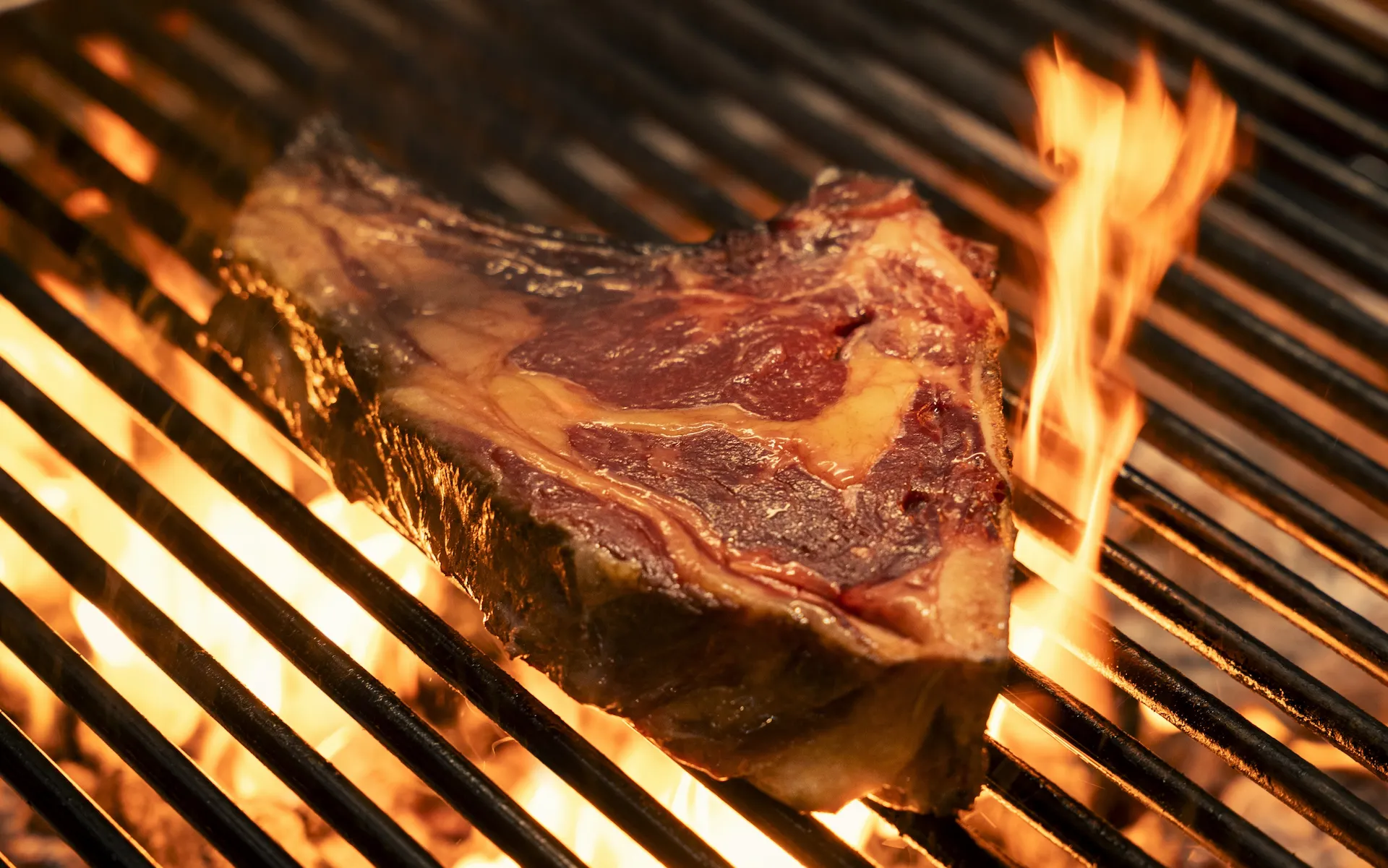
The oak charcoal fire we use at Carbònic produces a dry, intense heat that sears fast and allows that pink interior the cut needs. The bone acts as a heat conductor from within: the meat closest to it cooks differently from the rest — firmer in texture, more pronounced in flavour. Another of the nuances that make the T-Bone a cut that never gets repetitive.
The wine to go with it
A T-Bone of this quality needs a red with enough body to stand up to the fat, and enough acidity to clean the palate between bites. Our usual recommendation is a Mencía from Bierzo.
For years it was considered a minor grape — difficult to manage, prone to dilution when pushed into high yields. What the best producers in Bierzo have demonstrated over the past two decades is that, with low yields, clay soils and quartzite, and careful winemaking, Mencía produces reds of uncommon elegance: red and dark fruit of good ripeness, wild herbs, a mineral backbone that recalls the slate of the valleys, and a natural acidity that makes it a true table wine in the finest sense. It cleanses, accompanies, and never competes with the food. That is exactly what we ask of a wine when there is good meat on the table.
The cut that earned its place
There is a particular satisfaction in watching a product that began as unfamiliar to much of our clientele become, table by table, one of the most requested. The T-Bone didn't arrive at Carbònic because it was trending. It arrived because we believed in it, and because we knew that, given time and the right product, it would explain itself.
Three years on, it has been on our menu since the first day. And it remains one of the most reordered cuts we serve.
Ready to reserve your table and try it this week?
By
Jordi PereraCo-founder · Carbònic Restaurant, Salou
Jordi Perera is co-founder of Carbònic Restaurant. With a long career in hospitality, he writes about gastronomy, dry-aged meats, wines and the culture of fire and the grill on the Costa Dorada.
Has it whetted your appetite? Come and discover it in person.
Book a tableDiscover the philosophy behind every dish that comes from our grill.
Our complete grill and fire proposal in Salou →